Pest List T-Z
| Pest / FS link | Excerpt |
|---|---|
Termites (wood destroying)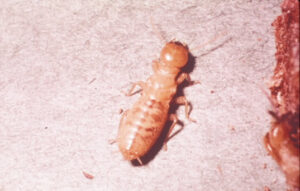 | There are two native termites in our area: The dampwood termite and the subterranean termite. Dampwood termites swarm in late summer or fall especially after rains. The subterranean termites may swarm any time of the year. |
Thatching ants (nuisance)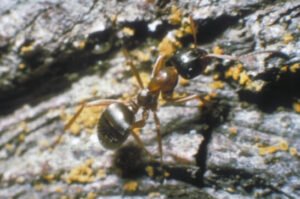 | Thatching ants are medium to large ants (3/16 – 5/16 inch long). They can be black to red and black. These ants are sometimes called mound ants because some species construct mounds from plant debris like fir needles |
Ticks (stinging & biting)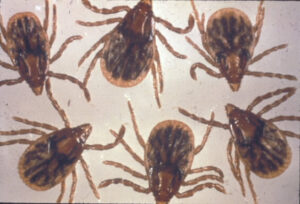 | Ticks are blood-sucking ectoparasites. They are commonly found on low-lying vegetation waiting for a host to brush past them. At that time, the tick will cling to the host and begin searching for a feeding site. |
Tropical rat mites (stinging & biting)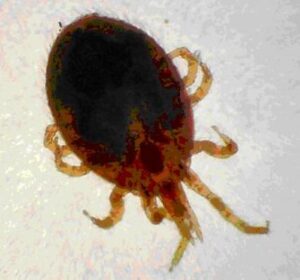 | These small mites are 1-1.5 mm in length, grey to yellowish or even reddish after a blood meal. Their normal hosts include rats, mice, hamsters and probably other rodents as well. |
Western boxelder bug (nuisance)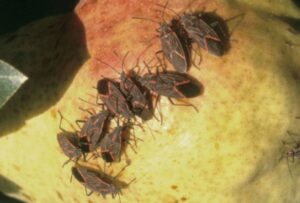 | The western boxelder bug is a flat, slender insect about ½ inch long and ¼ inch wide. The adults’ wings are dark grey to black with conspicuous red lines. |
Whiteshouldered house moth (food & fabric)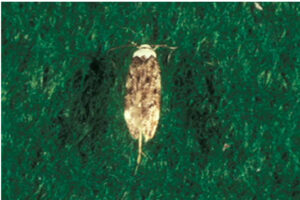 | The whiteshouldered house moth is occasionally found in household products. The adults are quite distinctive, having grayish-white wings with dark spots and a “shoulder” area that is bright white. |
Widow spiders (stinging & biting)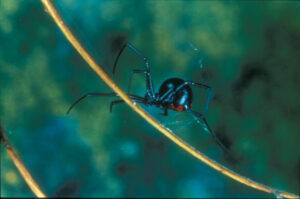 | The western black widow (Latrodectus hesperus) female is a velvety jet black with two reddish markings on the underside of their abdomen resembling an hourglass. Males and immatures are striped with white and yellow. |
Wood-rotting fungi (wood destroying)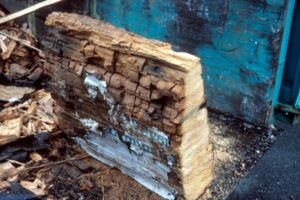 | In the Pacific Northwest, fungal organisms are the primary cause of wood decay. Wood-rotting fungi require moisture which can result from inadequate ventilation, faulty plumbing, and roof leaks... |
Yellowjackets (stinging & biting)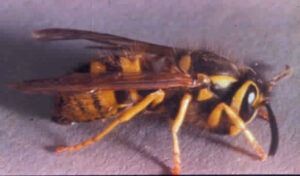 | Yellowjackets are about 1/2 inch long as workers. They are striped with black and yellow or black and white. They are social wasps with an annual life cycle. Fertilized queens overwinter in protected sites to begin the building of a new colony each spring. |
Pest List Menu

WSU Extension programs and employment are available to all without discrimination. Evidence of noncompliance may be reported through your local Extension office.