Pest List R-S
| Pest / FS link | Excerpt |
|---|---|
Root weevils (nuisance)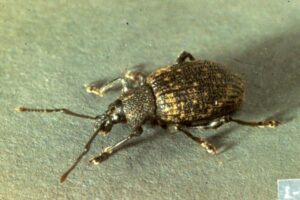 | Several species of weevils commonly enter homes either singly or in small groups, usually during late summer and into the fall. These beetles are collectively called “root weevils.” |
Rove beetles (curiosity & beneficial)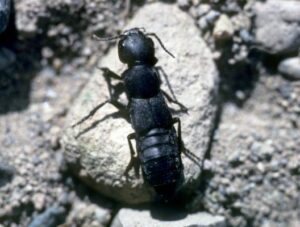 | Rove beetles are common insects in the yard and garden, and may sometimes be found in homes. The many species come in a wide variety of forms, but most common rove beetles are slender, elongate beetles ranging in size from 1/4” to one inch long. |
Sawtooth grain beetle (food & fabric)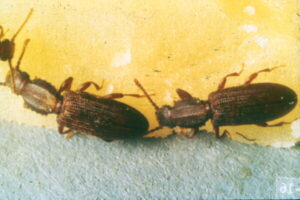 | The sawtoothed grain beetle and its look-alike relative, the merchant grain beetle, are slender, flattened, reddish-brown beetles that measure about 1/8 inch in length. They exhibit saw-like teeth along the edge of the prothorax (shoulder area). |
Scale insects (houseplant)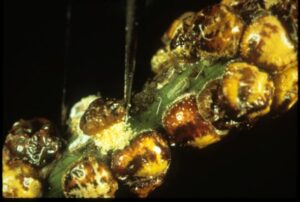 | Several species of scale insects may infest indoor plants. They are quite small, usually ranging from 1/16" to 1/8" in diameter. The scale is actually a hard shell which protects the female insect and eggs from physical and chemical damage. |
Seed bugs (nuisance)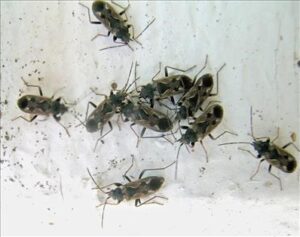 | Seed bugs are true bugs with piercing-sucking mouthparts. The front wings are hardened or leathery near the base with distinct veins and membranous near the tips. The wings are crossed in an X pattern when folded. |
Silverfish (nuisance)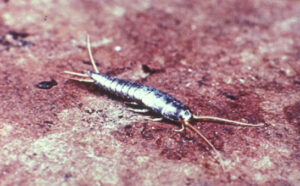 | Silverfish are wingless, fast-moving insects that are about 1/2 inch long. They have two long antennae on their head and three long bristles on their tail. |
Sowbugs and pillbugs (nuisance)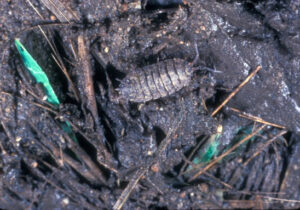 | Sowbugs and pillbugs are not insects. They are crustaceans and as such are more closely related to crabs, shrimp, etc. Sowbugs and pillbugs are often considered pests by gardeners because they are sometimes associated with gardens. |
Spider beetle (food & fabric)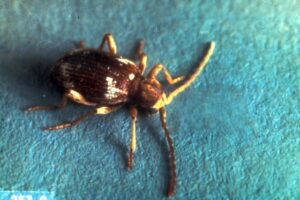 | Spider beetles are small globular-appearing beetles and possess an obvious spider-like appearance. They feed on a wide range of foods including grain products, feathers, rodent droppings, and other insects |
Spider mites (houseplant)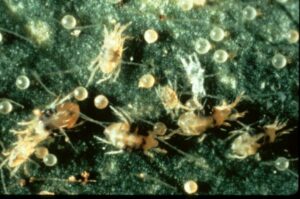 | Spider mites are common pests of indoor plants, thriving in the warm, dry conditions found in most homes. Each tiny eight-legged, spider-like mite is about the size of a period and can best be seen with magnification. |
Spiders [non-biting] (Nuisance)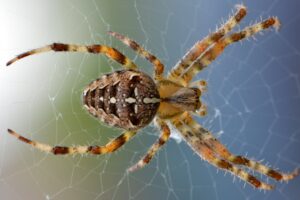 | To say spiders don’t bite would be in error, since all spiders bite their prey. Most spiders, particularly small species, have not been seen biting humans. |
| Spiders [non-biting] (curiosity & beneficial) | To say spiders don’t bite would be in error, since all spiders bite their prey. Most spiders, particularly small species, have not been seen biting humans. |
Springtails (nuisance)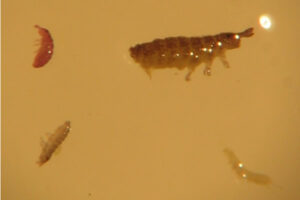 | Springtails are small (1/8 inch or less), wingless insects that can be found in large numbers during very wet conditions in the fall, winter, and spring. Typically, people notice large “piles of soot” in driveways, back yards, or on the surface of mud puddles. |
Pest List Menu

WSU Extension programs and employment are available to all without discrimination. Evidence of noncompliance may be reported through your local Extension office.