Pest List N-Q
| Pest / FS link | Excerpt |
|---|---|
Native longhorned beetles [Cerambycids] (curiosity & beneficial)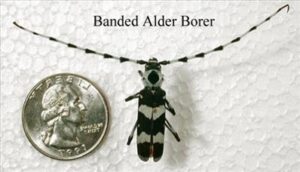 | Longhorned beetles (roundheaded woodborers) are usually large beetles with long antennae. The body is typically long and cylindrical with parallel sides. The antennae are at least half the length of the body... |
Odorous house ants (nuisance)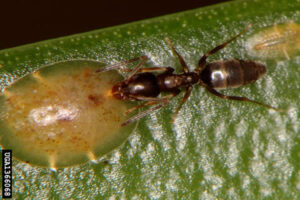 | Odorous house ants are extremely small. Workers are approximately 1/16 inch long and have a uniform brown to black color. |
Orchard mason bees (curiosity & beneficial)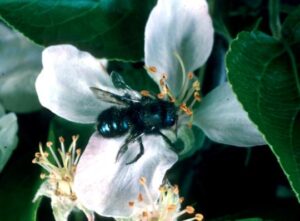 | Orchard mason bees are black to metallic blue bees and are slightly smaller than a honeybee. They are often mistaken for house flies, because they may enter houses and be found in sunny windows in the early spring. |
Pavement ants (nuisance)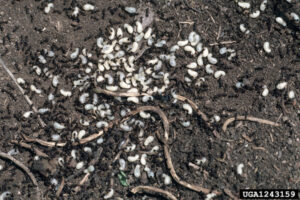 | Pavement ants are becoming more common as a nuisance ant pest in the Pacific Northwest. This small ant measures about 1/8 inch or a little less in length. Body colors range from light brown to darker browns and blacks while the appendages are lighter in color. |
Powderpost beetles (wood destroying)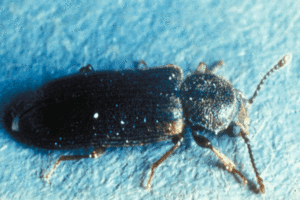 | Powderpost beetles, or lyctids, feed on starch in hardwoods, such as oak, cherry, or ash, and they will also feed in bamboo. These insects are usually brought into a home in hardwood flooring, trim, plywood, and wooden articles such as furniture and tool handles. |
Predaceous ground beetles [Carabids] (curiosity & beneficial)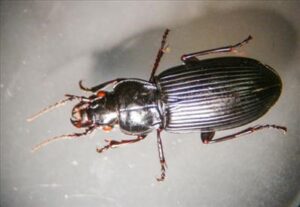 | The predaceous ground beetles, or carabids, belong to one of the largest beetle families in North America. There is considerable variation in color, size, and shape between the many species. |
Pseudoscorpions (nuisance)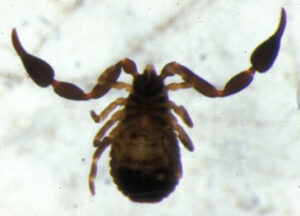 | Pseudoscorpions are flattened, oval-shaped, and related to spiders. Pseudoscorpions are commonly found in houses but also occur outside under loose bark, dead leaves, etc. |
Psocids [booklice or barklice] (food & fabric)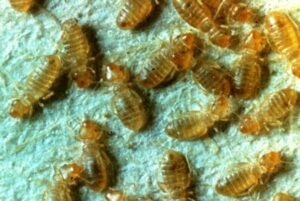 | Psocids are small insects, usually 1/16 to 1/8 inch long. While sometimes called booklice or barklice, psocids are not lice. |
Pubic lice [crabs, crab lice] (stinging & biting)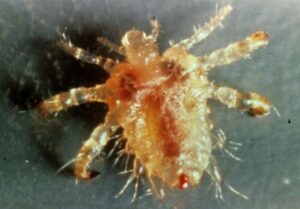 | The pubic or crab louse is an insect pest of humans spread almost exclusively by intimate or sexual contact. That said, it is possible to become infested from contact with contaminated... |
Pest List Menu

WSU Extension programs and employment are available to all without discrimination. Evidence of noncompliance may be reported through your local Extension office.