Lady beetles
categories: Curiosity and Beneficial Pests Fact Sheet
revision date: 2025-12-30 03:05
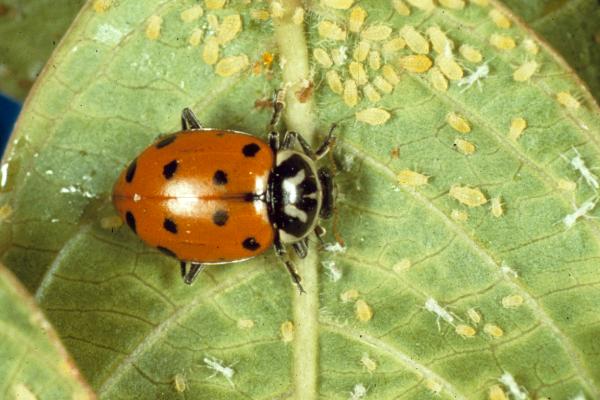
Photo by: unknown
Biology
There are several species of lady beetles (ladybird beetles, “ladybugs”) that occur in the Pacific Northwest. Many of the species commonly seen in the garden resemble the “classic” lady beetle, with black bodies and conspicuous red to orange wing covers marked with black spots. Other lady beetles may be black and white or even black with red spots.
As a group, lady beetles are considered beneficial insects. The adults and larvae of many species feed on small, soft-bodied insects such as aphids, mites, or mealybugs.
Besides their obvious coloration, common lady beetle species are distinguished by their characteristic body shape (round to oval), size (most are about 1/4 inch long), their short legs and antenna, and small head. Lady beetle eggs are usually laid on or near plants infested with prey insects. The eggs are spindle-shaped and yellowish to orange in color. They are laid on end (upright) in small clusters, often on the back of leaves, on bark or plant litter.
The alligator-shaped larvae are dark gray to blue-gray with orange markings. The black and orange pupae are rounded and often found on leaves. Adults and larvae may occasionally bite humans if handled; however, lady beetle bites are not known to pose any risk to human health.
- For more information, visit the WSU Puyallup Plant Clinic Pest Leaflet Series, https://puyallup.wsu.edu/plantclinic/pls/, and read,
- The multicolored Asian lady beetle, a non-native species introduced for pest control, can become a nuisance in homes as adults search for overwintering sites. For more information on this species, see the Multicolored Asian lady beetle page in the Nuisance section of this website.
- For more information see: EM067E: ‘Beneficial Insects, Spiders, and Other Mini-Creatures in Your Garden ()’ by Dr. David James.
Management Options
Use Integrated Pest Management (IPM) for successful pest management.
Non-chemical Management
Select non-chemical management options as your first choice!
- No control measures are necessary or recommended. Lady beetle larvae and adults are important predators of pest insects and should be welcomed to your garden.
- If lady beetles are encountered indoors, the best method for dealing with them is to gently sweep them up or scoop them up on a piece of paper and place them outdoors.
Chemical Management
IMPORTANT: Visit Home and Garden Fact Sheets for more information on using pesticides.
- None recommended
Additional Images
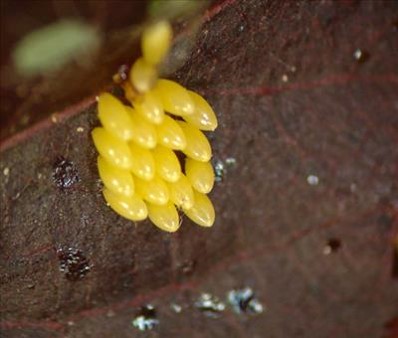
Photo by: M. Bush
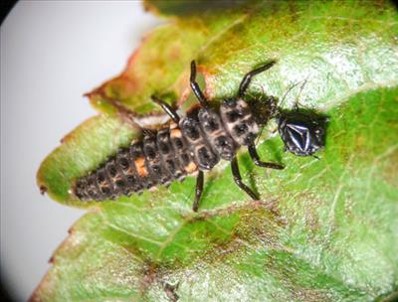
Photo by: M. Bush
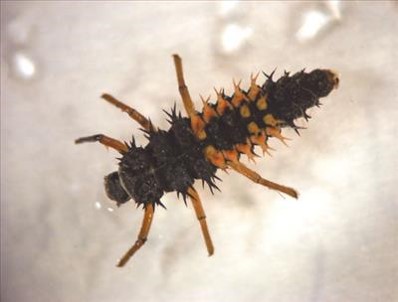
Photo by: M. Bush
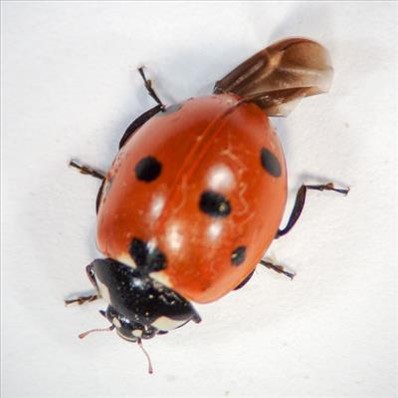
Photo by: M. Bush
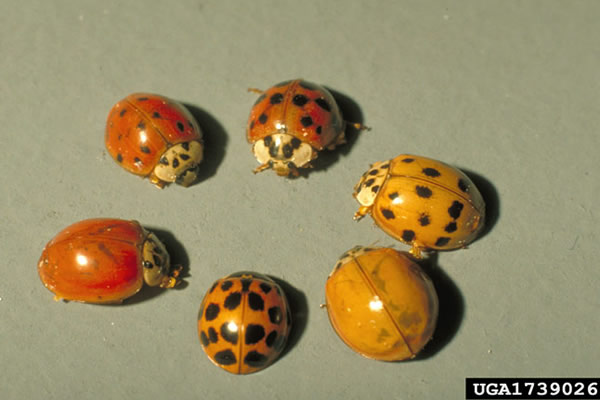
Phot by: Bill Ree, Texas A&M University, Bugwood.org
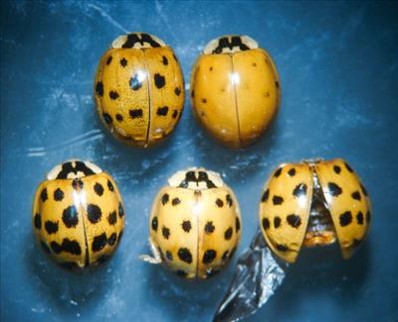
Photo by: J. Vanden Houwen, WSU Extension
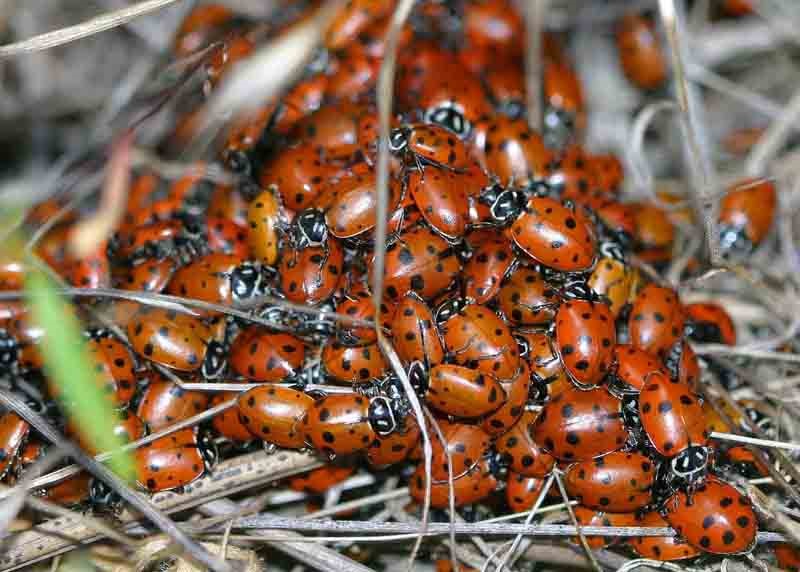
Photo by: D.G. James
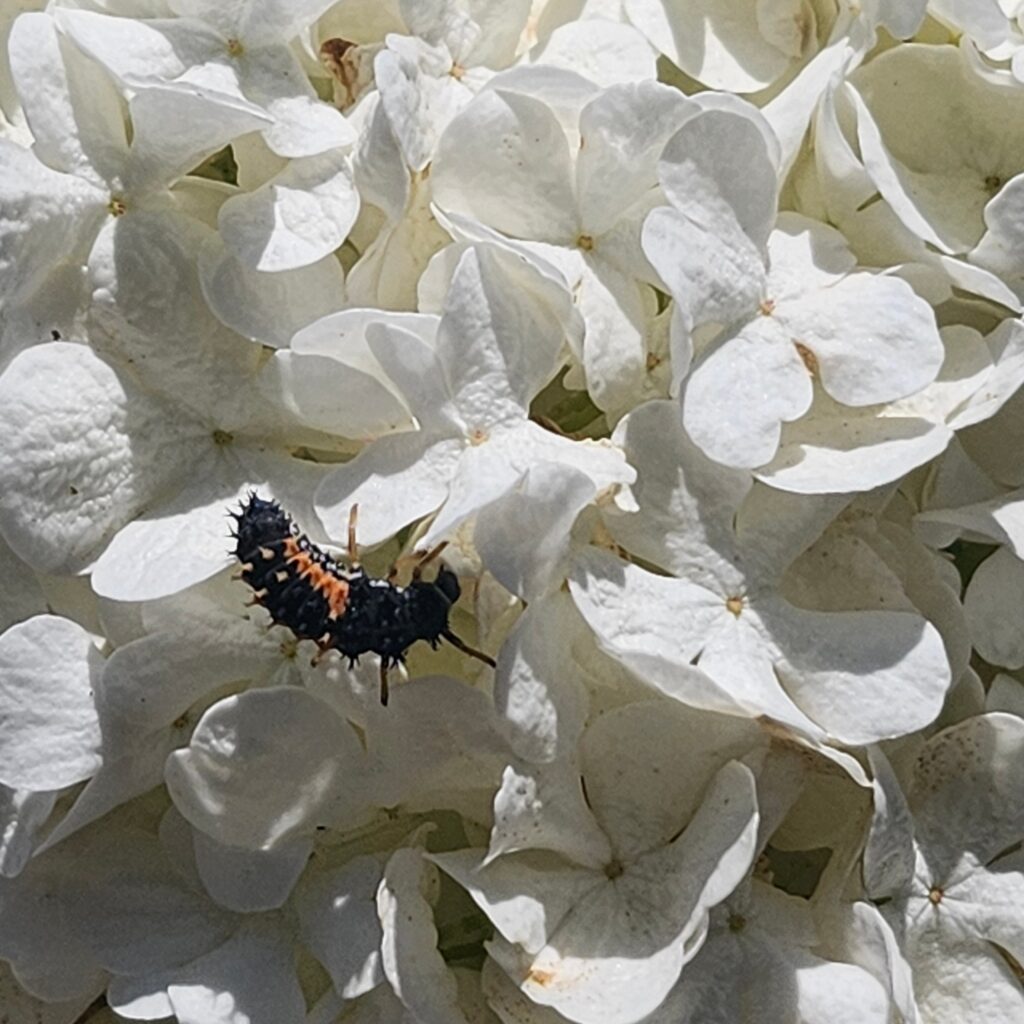
Photo by: Craig Lawrence - WSU Extension Master Gardener
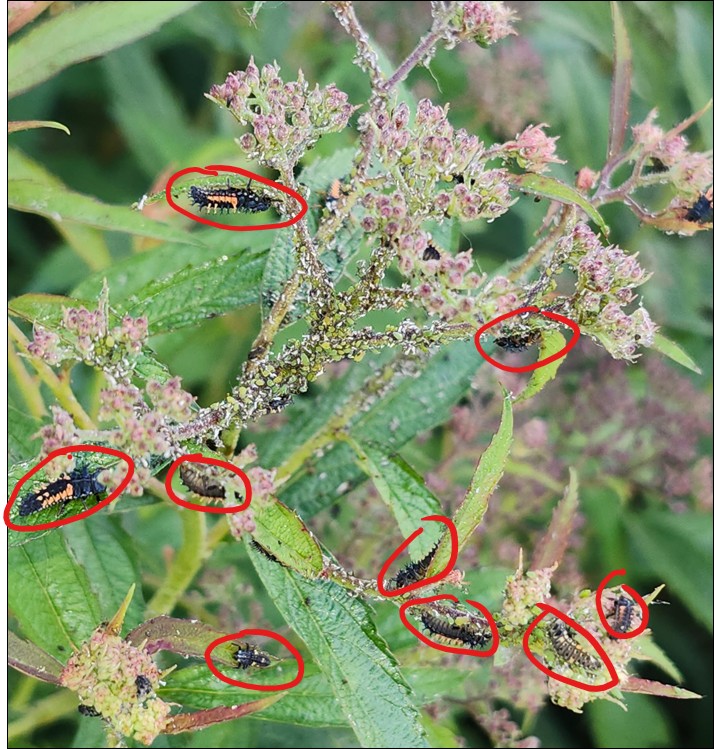
Photo by: Craig Lawrence - WSU Extension Master Gardener

WSU Extension programs and employment are available to all without discrimination.
Evidence of noncompliance may be reported through your local Extension office.
Right click here and select Copy Link to copy fact sheet URL