Multicolored Asian lady beetle
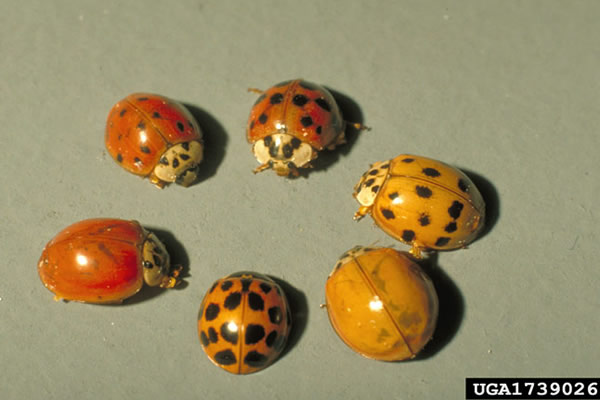
Phot by: Bill Ree, Texas A&M University, Bugwood.org
Biology
The multi-colored Asian lady beetle was introduced into the United States as a biological control agent and is now found in large numbers in Washington. As their name indicates, these beetles come in many different colors from red or orange with black dots to black with red dots. No matter what color they are, multi-colored Asian lady beetles are voracious predators.
The larvae look like small, spiny, black and orange alligators. Both the adults and lady beetle larvae are beneficial and eat soft-bodied insects such as aphids. Most lady beetles spend the winter months in large groups.
Unfortunately, the multi-colored Asian lady beetle tends to congregate and look for overwintering sites on houses and other buildings. The beetles are attracted to the vertical surfaces of the house walls and the warmth of the house tends to draw them inside.
Multi-colored Asian lady beetles are not a health threat, but they have been known to bite, and they can produce an unpleasant odor and stain.
- For more information on lady beetles, see the Lady beetles page in the Curiosity/Beneficial section of this website.
Management Options
See "Using Integrated Pest Management (IPM) in the Landscape" for successful pest management techniques.
Non-chemical Management
Select non-chemical management options as your first choice!
- Locate and seal up cracks and crevices and other beetle entry points.
- Make sure screens and doors are tight-fitting.
- Vacuum up beetles and dispose of them far away from the building.
Chemical Management
IMPORTANT: Always read and follow label directions when working with pesticides.
For more information on using pesticides visit :
- None recommended
Additional Images
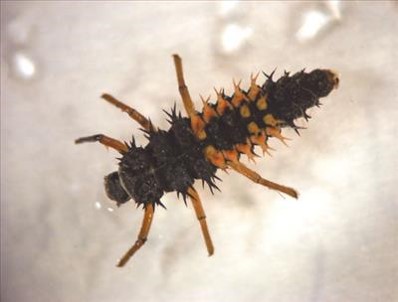
Photo by: M. Bush
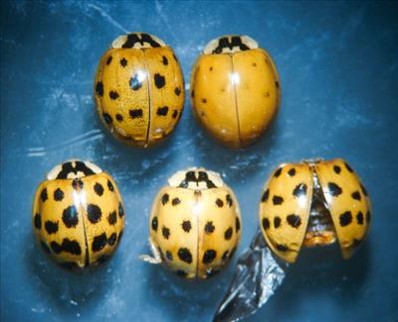
Photo by: J. Vanden Houwen, WSU Extension
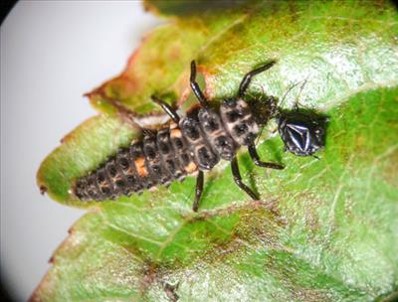
Photo by: M. Bush
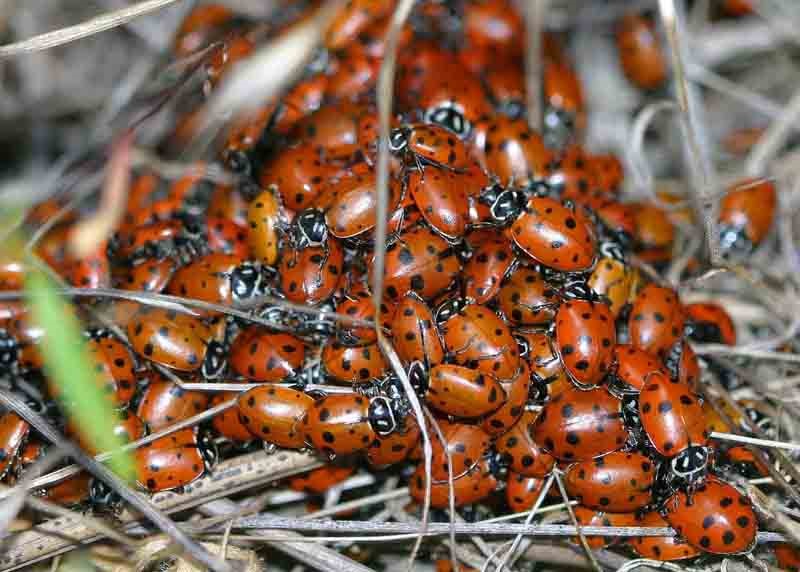
Photo by: D.G. James

Photo by: M. Bush
Photo by: M. Bush
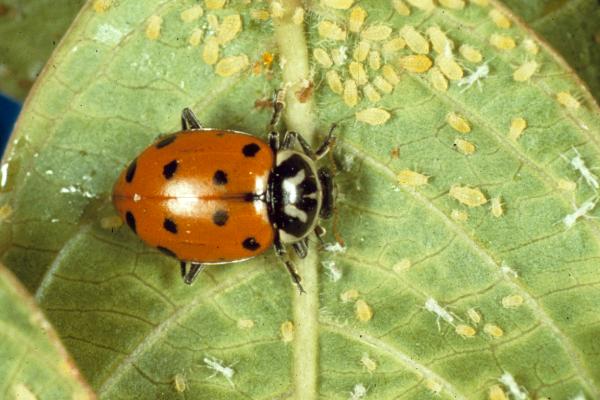
Photo by: unknown

WSU Extension programs and employment are available to all without discrimination.
Evidence of noncompliance may be reported through your local Extension office.