Full Alphabetic Pest List
| Pest / FS link | Excerpt |
|---|---|
Aphids (houseplant)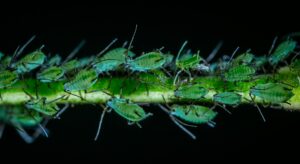 | Aphids are small (1/16" to 1/8"), soft-bodied, sap-sucking insects. Depending on species, their color can vary from green to yellowish to rose-colored or black. Some species may appear powdery or woolly. Adults are winged, but usually most of the infestation consists of wingless individuals. |
Bagworms (nuisance)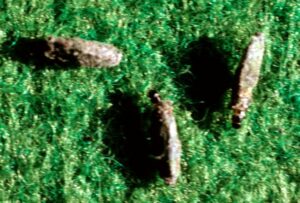 | Bagworms belong to a moth family called Psychidae. Their larvae live inside of peculiar cases or bags which they make from various plant materials or sand. |
Bed bugs (stinging & biting)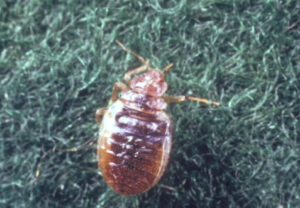 | Bed bugs are ectoparasites, which means that they feed on the outside of their host. They attack humans, bats, chickens, and occasionally other animals. Adult bed bugs are flat and small (around 1/4 inch long). |
Bird mites (stinging & biting)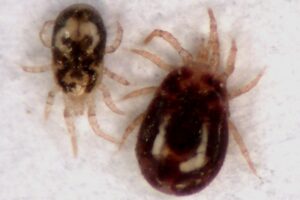 | Northern fowl mites and chicken mites are blood-sucking parasites of domestic poultry and wild birds throughout much of the United States. Both species can become a pest in the home when starlings, pigeons, sparrows, or other wild birds nest in the eaves, attic, chimney, etc. |
Bot flies [warbles] (stinging & biting)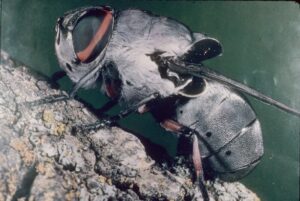 | Bot flies are among the few true insect parasites (a parasite is an organism that lives in another (the host) without killing it). There are two families: The robust bot flies (Cuterebrids) which include the tropical human bot fly and the rodent bot fly, and the warbles and bots (Oestrids) which include the northern cattle grub, sheep bots, horse bots and several others. |
Brown marmorated stink bug (nuisance)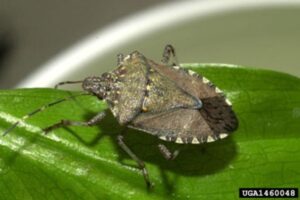 | The brown marmorated stink bug (BMSB) is an introduced species that is very mobile and spreading quickly across the United States. Both nymphs and adults are voracious feeders on a wide variety of plants, including small fruits, tree fruits, vegetables, and ornamentals. |
Bumble bees (curiosity & beneficial)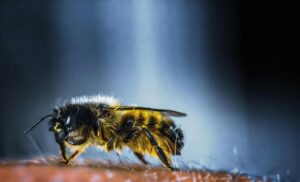 | Bumble bees are large, robust, hairy bees. They are early-season, social bees. Several species are native to the Pacific Northwest. While most are variously marked with black and yellow, some have distinctive orange or even reddish patches or stripes. |
Carpenter ants (wood destroying)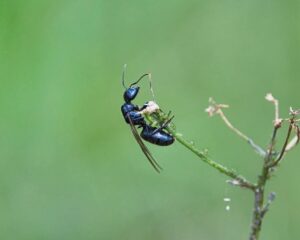 | Carpenter ants are large ants and can be 1/2 inch to 1/4 inch in length. They are black or red and black in color. They are a pest because they commonly make nests in homes. Carpenter ants do not eat wood, but they will excavate it for nesting and occasionally cause structural weakening. |
Carpet beetles (food & fabric)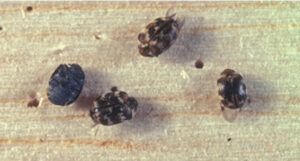 | These are small, elongate or oval beetles ranging from 1/10 to 1/3 inch long (for most species found in stored products) and varying in color and color pattern. They are most easily diagnosed as larvae which are often elongate and quite hairy or with distinctive tufts of hair, especially at the end of the body. |
Casemaking clothes moth (food & fabric)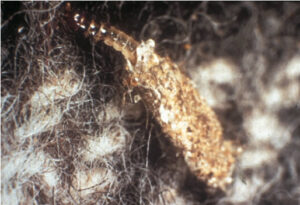 | Clothes moths are widespread pests of fabrics, wool, furs, and other items of animal origin. The two species of clothes moths common to Washington are the webbing clothes moth and the casemaking clothes moth. |
Centipedes (nuisance)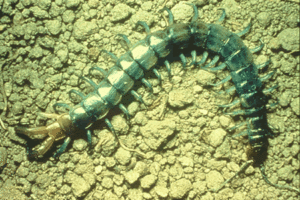 | Centipedes are a class of arthropods related to insects. Centipedes are very fast moving and flat. Centipedes have a pair of poison jaws that assist them in overcoming prey. Hence they are considered beneficial predators. |
Clover mites (nuisance)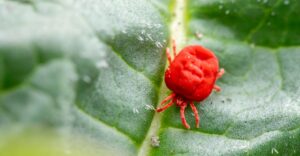 | Clover mites are small (1/100 of an inch long), oval-shaped reddish-brown mites and occasional household pests. A clover mite's front legs are typically longer than the other three pairs of legs and can be mistaken for antennae. Clover mites feed on clover and grasses and do not bite humans or animals or cause structural damage, but they can be a nuisance |
Cluster flies (nuisance)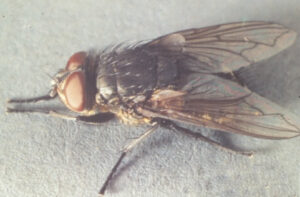 | Cluster flies resemble house flies, but are larger and slower in movements. They are about 5/16 inch long, dark gray with black and gray checkered abdomens. Cluster fly larvae or maggots are parasites of earthworms. |
Cockroaches (nuisance)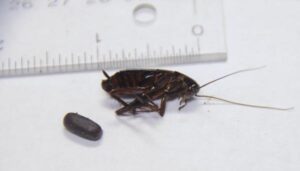 | Cockroaches are flat insects that are found in a variety of colors. There are four common pest species: The German cockroach, the American cockroach, the brownbanded cockroach, and the Oriental cockroach. The German cockroach is most commonly found in the Pacific Northwest. |
Crickets (food & fabric)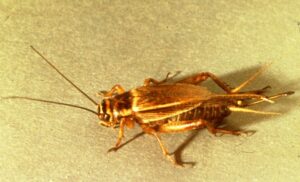 | There are two major cricket species that may invade homes. These include field crickets and the house cricket. The house cricket is the most common home invader in our area. The house cricket adult averages about 3/4 inch long and is yellowish-brown or straw-colored, with 3 dark bands on the head. |
Cupboard beetle (food & fabric)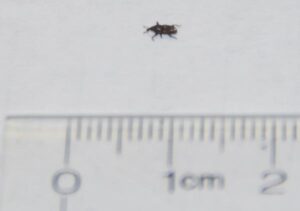 | Cupboard beetles are a collection of beetle species that attack stored grain products or household foodstuffs. They range from 1/8 inch in length to a little smaller. They are variously colored, but tend to be brownish. Most of them can fly. Once established in food, populations of these insects can explode and move through the home and infest any exposed food. |
Deathwatch beetles [Anobiids] (wood destroying)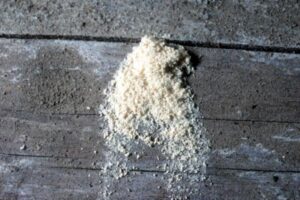 | Deathwatch beetles or anobiids are reddish to chocolate brown beetles ranging from 1/8 to 1/4 inch long. These beetles are rarely seen by people, but fresh piles of granular or gritty frass (insect excrement) on the outside of joists, mudsills, etc. are a sign of their presence. The larval form spends 4-5 years feeding on wood before emerging, mating and laying eggs. |
Drugstore beetle (food & fabric)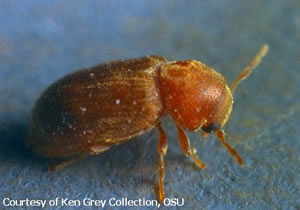 | Adult drugstore beetles are reddish-brown beetles about 1/8 inch long. Their head is bent downward, making it difficult to see their head when viewed from above. How long a drugstore beetle lives depends on its food source and environmental conditions. The larvae are C-shaped creamy white grubs and can feed for two to twenty months. |
European fire ant (stinging & biting)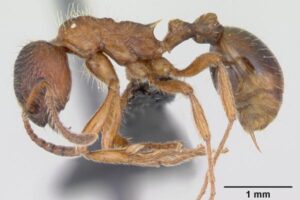 | The European fire ant (Myrmica rubra), sometimes known as the red ant or ruby ant, is a native of Europe and Asia. It has been present in the northeastern United States and neighboring Canadian provinces for many years, and has also been found recently in Washington State and British Columbia. While its occurrence in the Pacific Northwest is relatively isolated for now, it has great potential to spread and become a significant pest in our area. |
European paper wasp (stinging & biting)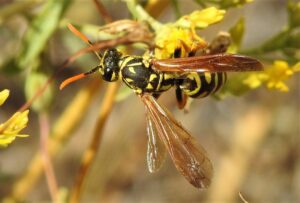 | The European paper wasp was introduced into Washington in the late 1990’s. Although we have a native paper wasp, it is found mostly in eastern and central Washington. The European paper wasp is now the most common species in western Washington. Like yellowjackets, they are about 1/2 inch long as workers and are black- and yellow-striped. However, paper wasp have a more thread-like waist than yellowjackets. |
Firebrats (nuisance)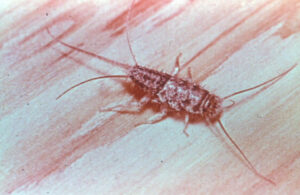 | Firebrats are wingless, fast-moving insects about 1/2 inch long. They have two long antennae on their head and three long bristles on their tail. Firebrats are mottled tan in color and prefer to live in very warm areas such as around furnaces and hot water pipes. They feed on starchy materials such as glue, paste, fabric finish, book bindings, paper and fabric and can be found anywhere in the house. |
Fleas (stinging & biting)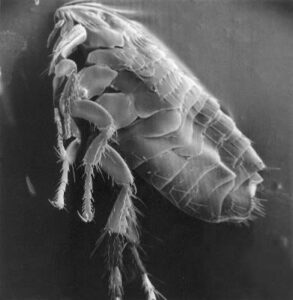 | Fleas are “nest parasites”. They generally move between the host animal (cat or dog) and the bedding (nest). The typical flea population in a home is comprised of 50% eggs, 35% larvae, 10% pupae, and only 5% adult fleas. Eggs, larvae and pupae are typically found in pet bedding, carpets, rugs, or on upholstered furniture where pets sleep. |
Fruit flies (nuisance)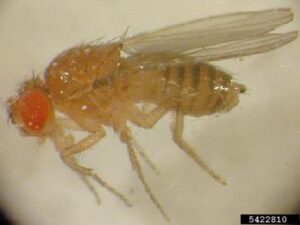 | Fruit flies are a common and annoying problem in homes, restaurants, supermarkets, and any other place where there is rotting and fermenting food. Fruit flies can be a problem any time of the year. Adult fruit flies are 1/8 inch long, usually have red eyes, and a tan and gray body. Fruit flies lay their eggs near the surface of fermenting food and moist organic material. |
Fungus gnats (houseplants)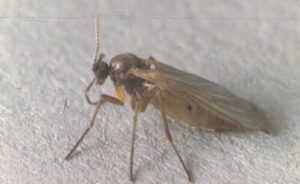 | Fungus gnats are small (1/8 inch) gray-black flies often noticed around houseplants and windows. Most species inhabit fungi or dead plant material, but a few species have maggots that injure plant roots. Even non-pest species can injure plants if their preferred food source of decaying plant material is not available. |
| Fungus gnats (nuisance) | Fungus gnats are tiny, dark, slender flies about 1/8” long which commonly infest the soil and roots of houseplants. Adult fungus gnats are mainly a nuisance, flying around plants and running on the soil and other nearby surfaces. The larvae of some species attack roots. With sufficient numbers of larvae present, larval damage may cause yellowing and wilting of leaves. |
Giant house spider (curiosity & beneficial)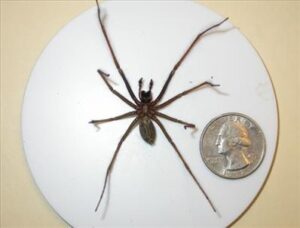 | The giant house spider, Eratigena atrica (formally known as Tegenaria gigantea and T. duellica), is commonly found in and around Washington homes west of the Cascade Mountains. Its range also includes parts of coastal Canada and Oregon. They are not found east of the Cascades in Washington. It is often seen in mid-summer to early fall, when males in particular are highly mobile. |
| Giant house spider (nuisance) | The giant house spider, Eratigena atrica (formally known as Tegenaria gigantea and T. duellica), is commonly found in and around Washington homes west of the Cascade Mountains. Its range also includes parts of coastal Canada and Oregon. They are not found east of the Cascades in Washington. It is often seen in mid-summer to early fall, when males in particular are highly mobile. |
Hackled band weavers (stinging & biting)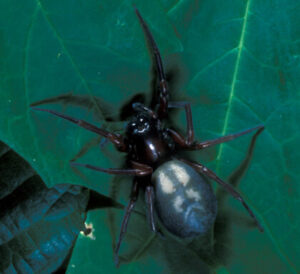 | These are robust spiders commonly found in crawl-spaces in western Washington. Hackled band weavers have grayish abdomens and chestnut colored legs and carapaces (exoskeleton over their head and thorax). A bite from a hackled band weaver results in a temporarily painful sensation much like a yellowjacket sting. |
Head lice (stinging & biting)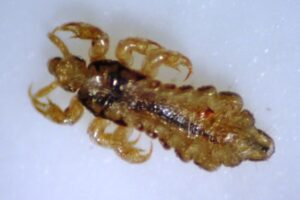 | The human head louse is a common pest, frequently found where large numbers of people are in close daily contact. It can be a significant pest in schools, particularly among preschool and elementary-age children. |
Hobo spider (curiosity & beneficial)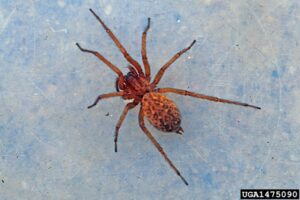 | The hobo spider (Eratigena agrestis, formerly Tegenaria agrestis) is one of the most commonly found funnel-web or funnel weaver spiders in some parts of Washington. This relatively large (1 – 1 3/4 inches including legs), swift-running spider builds its funnel-shaped web in dark, moist areas, often in basements, and waits at the mouth of the funnel for prey to become entangled in the web. |
| Hobo spider (nuisance) | The hobo spider (Eratigena agrestis, formerly Tegenaria agrestis) is one of the most commonly found funnel-web or funnel weaver spiders in some parts of Washington. This relatively large (1 – 1 3/4 inches including legs), swift-running spider builds its funnel-shaped web in dark, moist areas, often in basements, and waits at the mouth of the funnel for prey to become entangled in the web. |
Honey bees (curiosity & beneficial)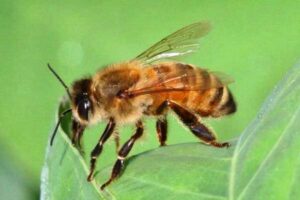 | The domesticated honey bee, Apis melifera, is a crucial pollinator for many agricultural crops including tree fruits and small fruits. In the home garden, honey bees help pollinate and ensure the productivity of our fruit trees, berry patches, and vegetable gardens. The honey bees we most often encounter in the garden are female workers, collecting pollen and nectar. |
House centipede (nuisance)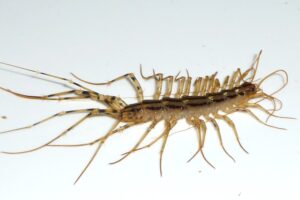 | The house centipede (Scutigera coleoptrata) is a slender, flattened, many-segmented arthropod approximately 1 to 1 1/2 inches long. It can be found throughout the United States, both in and outdoors in warmer areas, and primarily indoors in colder regions. This centipede is grayish-yellow in color with three dark stripes running along its back. |
House dust mites (nuisance)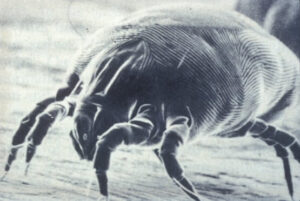 | House dust mites are extremely small (up to 0.5 mm) and can be found as a component of house dust. They are principally found in cotton-stuffed mattresses and furniture, although they can also be found on birds, in bird nests, on animals and on humans. |
House flies (nuisance)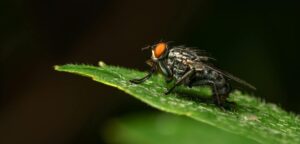 | The house fly is one of the most cosmopolitan insects and has been considered a pest for centuries. The house fly measures 3/16 to 1/4 inch long and can be distinguished from other flies by the 4 dark stripes on the thorax and the yellowish abdomen with dark markings. |
Indian meal moth (food & fabric)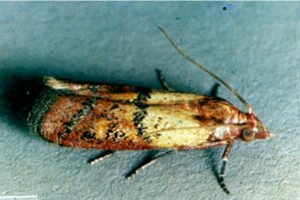 | The most common moth found in foodstuffs is the Indian meal moth. This moth has a wingspan of about 1/2 to 3/4 inch. The tips or outer half of the wings are reddish-brown or “coppery”, while the basal parts are grayish-white. The larvae are usually off-white but can be pink, yellowish, greenish, or brownish. At maturity, the larvae are about 1/2 inch long. |
Jumping spider (curiosity & beneficial)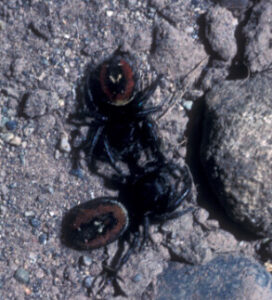 | Jumping spiders are compact, active, and usually colorful spiders that are found on window sills, ceilings, and on outside walls and foundations of homes. These spiders have large eyes, and use their good eyesight to catch prey. |
| Jumping spiders (stinging & biting) | Jumping spiders are compact, active, and usually colorful spiders that are found on window sills, ceilings, and on outside walls and foundations of homes. These spiders have large eyes, and use their good eyesight to catch prey. |
Lady beetles (curiosity & beneficial) | There are several species of lady beetles (ladybird beetles, “ladybugs”) that occur in the Pacific Northwest. Many of the species commonly seen in the garden resemble the “classic” lady beetle, with black bodies and conspicuous red to orange wing covers marked with black spots. |
Little house flies (nuisance)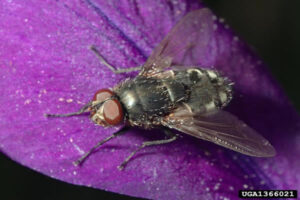 | The little house fly, sometimes called the lesser house fly, is a nuisance pest. The small male flies (1/8 to 3/16 inch long) are often found in houses; however, females are rarely found indoors. |
Mealybugs (nuisance)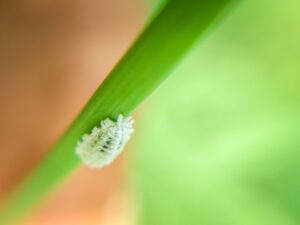 | Several species of mealybugs can attack houseplants. Mealybugs get their name from the white, powdery or cottony wax which covers their grayish to pinkish bodies. |
Mediterranean flour moth (food & fabric)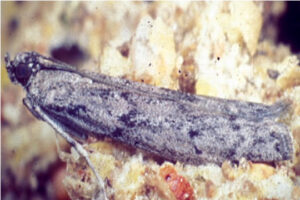 | Although not the most common food-infesting moth (that honor belongs to the Indianmeal moth), the Mediterranean flour moth is certainly a frequent one. This moth has a wingspan of about one inch. Forewings are grayish with dark zigzag lines and the hindwings are off-white. |
Mice and rats (nuisance)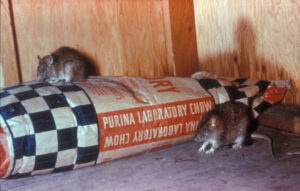 | These rodents are commonly problems wherever humans exist. Rodents will feed on just about anything including garbage, pet food, bird seed, meats, and nuts. |
Millipedes (nuisance)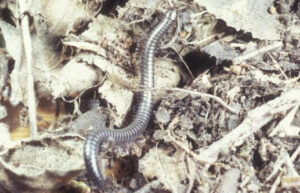 | Millipedes are arthropods in the class Diplopoda. Millipedes are characterized by being wormlike and quite elongate, with two pairs of legs on each body segment except for the front segments. |
Mites in stored foods (food & fabric)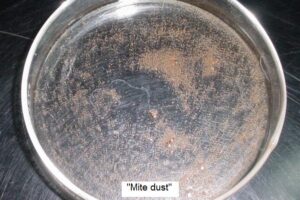 | Several species of mites (Tyroglyphidae) can become pests of stored foods. They infest products such as flour, cereals, packaged baking mixes, dried fruits, and pet foods. |
Moisture ants (nuisance)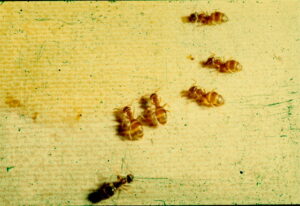 | Moisture ants are small ants (about 2/16 – 3/16 in length as workers). Color varies, but light yellowish-brown is the most common. |
Mosquitoes (stinging & biting)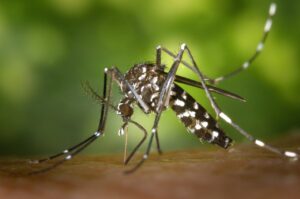 | Mosquitoes are pests because they annoy and bite humans and animals. Also, they may transmit or vector organisms that cause diseases such as malaria and encephalitis. |
Moth flies [drain flies] (nuisance)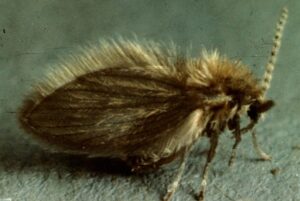 | Moth flies (sometimes called drain flies) are small hairy moth-like dipterans (true flies) in the family Psychodidae. As a group, they don’t get much larger 5 mm (about 1/5 inch) long. |
Multicolored Asian lady beetle (nuisance)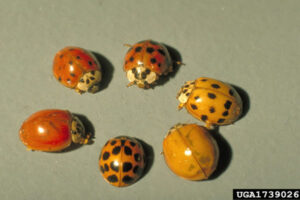 | The multicolored Asian lady beetle was introduced into the United States as a biological control agent and is now found in large numbers in Washington. As their name indicates, these beetles come in many different colors... |
Native longhorned beetles [Cerambycids] (curiosity & beneficial)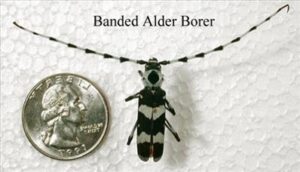 | Longhorned beetles (roundheaded woodborers) are usually large beetles with long antennae. The body is typically long and cylindrical with parallel sides. The antennae are at least half the length of the body... |
Odorous house ants (nuisance)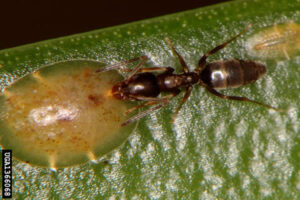 | Odorous house ants are extremely small. Workers are approximately 1/16 inch long and have a uniform brown to black color. |
Orchard mason bees (curiosity & beneficial)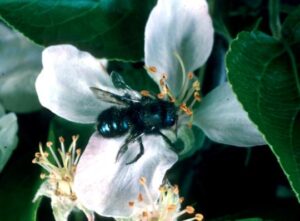 | Orchard mason bees are black to metallic blue bees and are slightly smaller than a honeybee. They are often mistaken for house flies, because they may enter houses and be found in sunny windows in the early spring. |
Pavement ants (nuisance)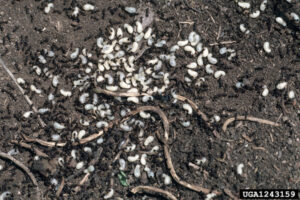 | Pavement ants are becoming more common as a nuisance ant pest in the Pacific Northwest. This small ant measures about 1/8 inch or a little less in length. Body colors range from light brown to darker browns and blacks while the appendages are lighter in color. |
Powderpost beetles (wood destroying)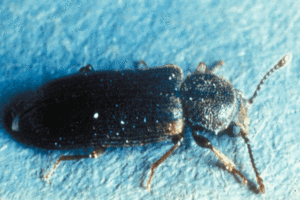 | Powderpost beetles, or lyctids, feed on starch in hardwoods, such as oak, cherry, or ash, and they will also feed in bamboo. These insects are usually brought into a home in hardwood flooring, trim, plywood, and wooden articles such as furniture and tool handles. |
Predaceous ground beetles [Carabids] (curiosity & beneficial)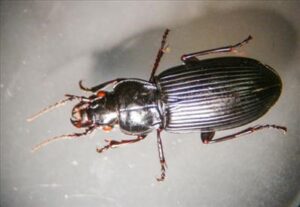 | The predaceous ground beetles, or carabids, belong to one of the largest beetle families in North America. There is considerable variation in color, size, and shape between the many species. |
Pseudoscorpions (nuisance)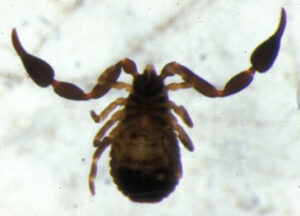 | Pseudoscorpions are flattened, oval-shaped, and related to spiders. Pseudoscorpions are commonly found in houses but also occur outside under loose bark, dead leaves, etc. |
Psocids [booklice or barklice] (food & fabric)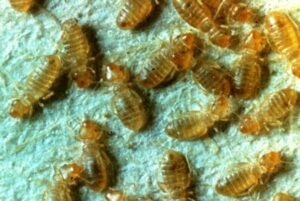 | Psocids are small insects, usually 1/16 to 1/8 inch long. While sometimes called booklice or barklice, psocids are not lice. |
Pubic lice [crabs, crab lice] (stinging & biting)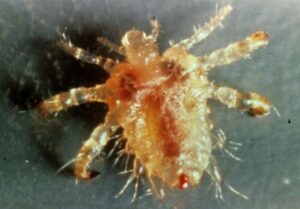 | The pubic or crab louse is an insect pest of humans spread almost exclusively by intimate or sexual contact. That said, it is possible to become infested from contact with contaminated... |
Root weevils (nuisance)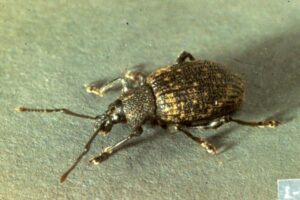 | Several species of weevils commonly enter homes either singly or in small groups, usually during late summer and into the fall. These beetles are collectively called “root weevils.” |
Rove beetles (curiosity & beneficial)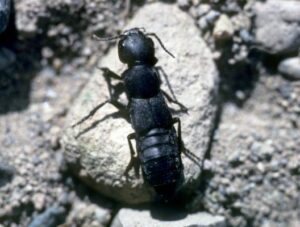 | Rove beetles are common insects in the yard and garden, and may sometimes be found in homes. The many species come in a wide variety of forms, but most common rove beetles are slender, elongate beetles ranging in size from 1/4” to one inch long. |
Sawtooth grain beetle (food & fabric)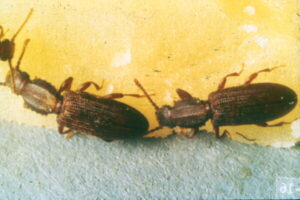 | The sawtoothed grain beetle and its look-alike relative, the merchant grain beetle, are slender, flattened, reddish-brown beetles that measure about 1/8 inch in length. They exhibit saw-like teeth along the edge of the prothorax (shoulder area). |
Scale insects (houseplant)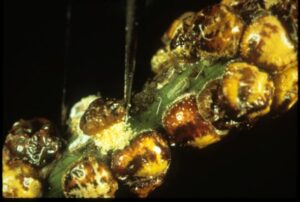 | Several species of scale insects may infest indoor plants. They are quite small, usually ranging from 1/16" to 1/8" in diameter. The scale is actually a hard shell which protects the female insect and eggs from physical and chemical damage. |
Seed bugs (nuisance)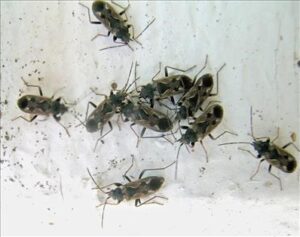 | Seed bugs are true bugs with piercing-sucking mouthparts. The front wings are hardened or leathery near the base with distinct veins and membranous near the tips. The wings are crossed in an X pattern when folded. |
Silverfish (nuisance)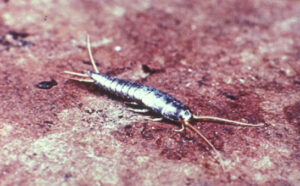 | Silverfish are wingless, fast-moving insects that are about 1/2 inch long. They have two long antennae on their head and three long bristles on their tail. |
Sowbugs and pillbugs (nuisance)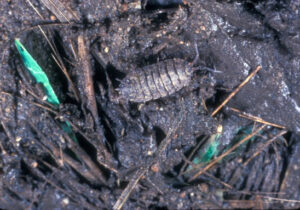 | Sowbugs and pillbugs are not insects. They are crustaceans and as such are more closely related to crabs, shrimp, etc. Sowbugs and pillbugs are often considered pests by gardeners because they are sometimes associated with gardens. |
Spider beetle (food & fabric)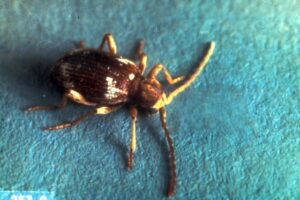 | Spider beetles are small globular-appearing beetles and possess an obvious spider-like appearance. They feed on a wide range of foods including grain products, feathers, rodent droppings, and other insects |
Spider mites (houseplant)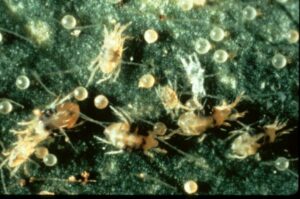 | Spider mites are common pests of indoor plants, thriving in the warm, dry conditions found in most homes. Each tiny eight-legged, spider-like mite is about the size of a period and can best be seen with magnification. |
Spiders [non-biting] (Nuisance)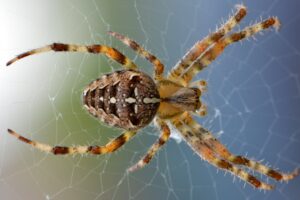 | To say spiders don’t bite would be in error, since all spiders bite their prey. Most spiders, particularly small species, have not been seen biting humans. |
| Spiders [non-biting] (curiosity & beneficial) | To say spiders don’t bite would be in error, since all spiders bite their prey. Most spiders, particularly small species, have not been seen biting humans. |
Springtails (nuisance)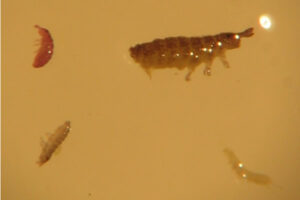 | Springtails are small (1/8 inch or less), wingless insects that can be found in large numbers during very wet conditions in the fall, winter, and spring. Typically, people notice large “piles of soot” in driveways, back yards, or on the surface of mud puddles. |
Termites (wood destroying)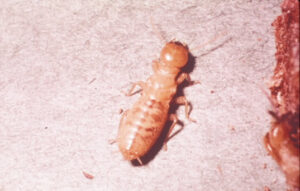 | There are two native termites in our area: The dampwood termite and the subterranean termite. Dampwood termites swarm in late summer or fall especially after rains. The subterranean termites may swarm any time of the year. |
Thatching ants (nuisance)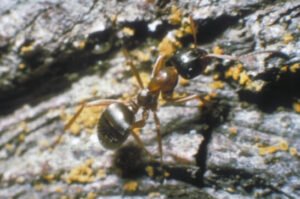 | Thatching ants are medium to large ants (3/16 – 5/16 inch long). They can be black to red and black. These ants are sometimes called mound ants because some species construct mounds from plant debris like fir needles |
Ticks (stinging & biting)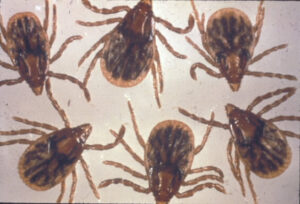 | Ticks are blood-sucking ectoparasites. They are commonly found on low-lying vegetation waiting for a host to brush past them. At that time, the tick will cling to the host and begin searching for a feeding site. |
Tropical rat mites (stinging & biting)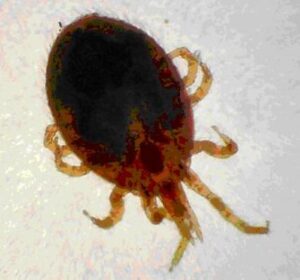 | These small mites are 1-1.5 mm in length, grey to yellowish or even reddish after a blood meal. Their normal hosts include rats, mice, hamsters and probably other rodents as well. |
Western boxelder bug (nuisance)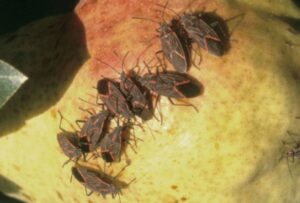 | The western boxelder bug is a flat, slender insect about ½ inch long and ¼ inch wide. The adults’ wings are dark grey to black with conspicuous red lines. |
Whiteshouldered house moth (food & fabric)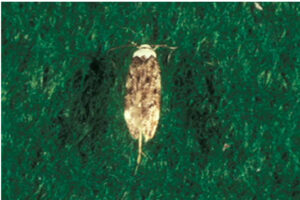 | The whiteshouldered house moth is occasionally found in household products. The adults are quite distinctive, having grayish-white wings with dark spots and a “shoulder” area that is bright white. |
Widow spiders (stinging & biting)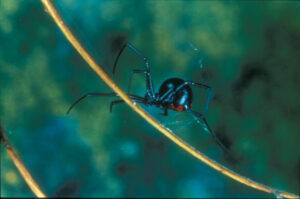 | The western black widow (Latrodectus hesperus) female is a velvety jet black with two reddish markings on the underside of their abdomen resembling an hourglass. Males and immatures are striped with white and yellow. |
Wood-rotting fungi (wood destroying)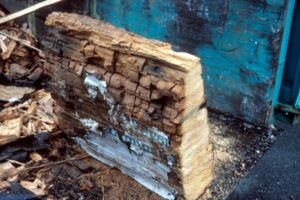 | In the Pacific Northwest, fungal organisms are the primary cause of wood decay. Wood-rotting fungi require moisture which can result from inadequate ventilation, faulty plumbing, and roof leaks... |
Yellowjackets (stinging & biting)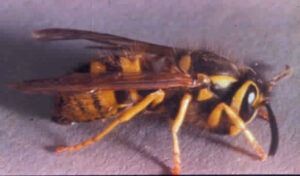 | Yellowjackets are about 1/2 inch long as workers. They are striped with black and yellow or black and white. They are social wasps with an annual life cycle. Fertilized queens overwinter in protected sites to begin the building of a new colony each spring. |
Pest List Menu

WSU Extension programs and employment are available to all without discrimination. Evidence of noncompliance may be reported through your local Extension office.