Thatching ants
categories: Fact Sheet Nuisance Pests
revision date: 2026-01-12 11:12
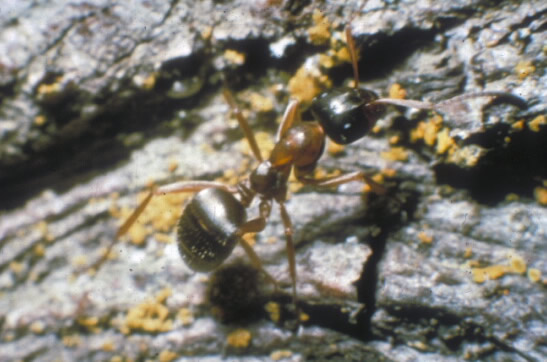
Photo by: Roger Akre
Biology
Thatching ants are medium to large ants (3/16 – 5/16 inch long). They can be black to red and black. These ants are sometimes called mound ants because some species construct mounds from plant debris like fir needles. Thatching ants sometimes nest in decayed logs and rarely in wall voids of homes.
Their normal pest status comes from nesting in landscapes where physical contact becomes inevitable. When their mounds are disrupted by human contact they bite in mass and then spray the area with formic acid to produce a painful sensation.
They are fierce predators and should be protected whenever possible. Mating swarms occur in late summer to early fall.
Management Options
Use Integrated Pest Management (IPM) for successful pest management.
Non-chemical Management
Select non-chemical management options as your first choice!
- Use a wet, soapy sponge to remove ants inside the house.
- Seal up any entryways.
- Sanitation is important. Clean up food and water sources including pet food and garbage.
- Keep vegetation away from structure.
- Since these ants are indigenous to our soils and nest anywhere they want they can be difficult to manage.
Chemical Management
IMPORTANT: Visit Home and Garden Fact Sheets for more information on using pesticides.
- Thatching ant nests can go relatively deep in the ground, so nest penetration is quite important and sometimes difficult.
- Do not apply product to just the nest entry hole as topical applications sometimes incite the remaining ants to simply move their colonies several feet from the surface residue.
- The entire nest surface and subterranean portion of the nest must be treated.
- One method is to dig deeply into the nest and stir the contents with a shovel while pouring the recommended amount of pesticide into the nest and surrounding area.
- Wear protective clothing to avoid bites.
Approved Pesticides
If you choose to use a pesticide, some examples of products that are legal in Washington are listed below. Some products are labeled for just INDOOR or just OUTDOOR use, or may allow both uses. Be sure to choose a product appropriate for your situation. Always read and follow all label directions.

WSU Extension programs and employment are available to all without discrimination.
Evidence of noncompliance may be reported through your local Extension office.
Right click here and select Copy Link to copy fact sheet URL