Springtails
categories: Fact Sheet Nuisance Pests
revision date: 2026-01-22 02:49
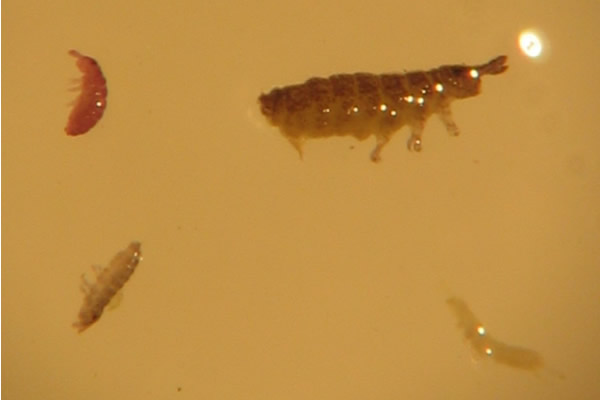
Photo by: Doug Collins, WSU
Biology
Springtails are small (1/8 inch or less), wingless insects that can be found in large numbers during very wet conditions in the fall, winter, and spring. Typically, people notice large “piles of soot” in driveways, back yards, or on the surface of mud puddles. These large piles are springtails or Collembola. These tiny insects do not bite humans, spread disease, or damage household furnishings, but they can be a nuisance simply by their presence.
Springtails get their name from their ability to catapult themselves up to 4 inches by using a tail-like mechanism which they keep tucked up under their abdomen. When they sense danger, they use this device to spring away from the danger source. These moisture-loving insects can be found under boards, houseplants, pots, bark, rotten logs, mushroom beds, snow, on pool surfaces, or in any damp area that is often accompanied by shade.
Springtails feed on mildew and other fungi, algae, and decaying organic matter.
Management Options
Use Integrated Pest Management (IPM) for successful pest management.
Non-chemical Management
Select non-chemical management options as your first choice!
- Eliminate moisture.
- Prevention–maintain a low humidity environment within a building. After entering the building they will dry out and the remains can be easily vacuumed.
- Remove leaves, mulch, etc. from around building foundations.
Chemical Management
IMPORTANT: Visit Home and Garden Fact Sheets for more information on using pesticides.
- None recommended

WSU Extension programs and employment are available to all without discrimination.
Evidence of noncompliance may be reported through your local Extension office.
Right click here and select Copy Link to copy fact sheet URL