Spiders (non-biting)
categories: Curiosity and Beneficial Pests Fact Sheet
revision date: 2025-03-23 08:47
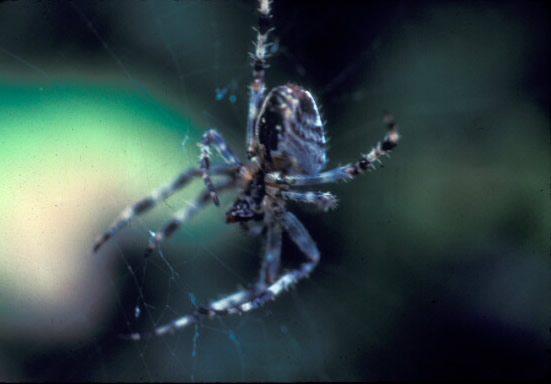
Photo by: Art Antonelli
Biology
To say spiders don’t bite would be in error, since all spiders bite their prey. Most spiders, particularly small species, have not been seen biting humans. However, these 8-legged creatures can be quite a nuisance.
The most common nuisance species are orb weavers which construct their vertical webs in the most inconvenient places – in front of entries, over paths between shrubs, in front of windows, etc. Furthermore, their constant defecation can dirty up decks and other surfaces to the extent of making them unsightly.
Remember all spiders feed on insects and their relatives so we should consider them beneficial.
- For more information see: EM113E: Common Spiders of Washington.
Management Options
Use Integrated Pest Management (IPM) for successful pest management.
Non-chemical Management
Select non-chemical management options as your first choice!
- Orb weaver spiders commonly build their webs across backlit windows. This encourages flying insects, which are attracted to light, thus providing the spiders with food. Diminishing such light sources at night will help discourage spider build up on windows.
- Use of mechanical devices such as fly swatters, shop vacs, brooms, etc. will help keep their numbers down. Remember, tolerance is also an option.
Chemical Management
IMPORTANT: Visit Home and Garden Fact Sheets for more information on using pesticides.
- None recommended

WSU Extension programs and employment are available to all without discrimination.
Evidence of noncompliance may be reported through your local Extension office.
Right click here and select Copy Link to copy fact sheet URL