Predaceous ground beetles (Carabids)
categories: Curiosity and Beneficial Pests Fact Sheet
revision date: 2025-12-31 02:47
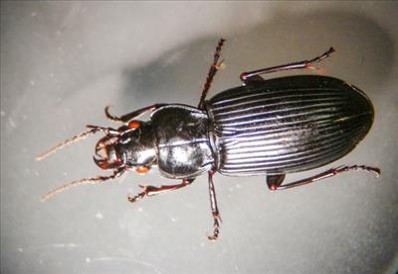
Photo by: J. Vander Houwen, WSU Extension
Biology
The predaceous ground beetles, or carabids, belong to one of the largest beetle families in North America. There is considerable variation in color, size, and shape between the many species. Most of the carabids are black to brightly iridescent or metallic, shiny, and broadly oval in outline with prominent mouthparts. The elytra (the hardened wing covers) are often marked with grooved lines or with rows of punctate dots.
Size varies widely between species, with common northwest species ranging from approximately 1/4 inch to over an inch in length. Adult beetles are nocturnal hunters, hiding in the daytime beneath plant debris, rocks, logs, or leaves, often in gardens or flower beds. They typically run rapidly when disturbed, seldom flying in the daytime.
The larvae are usually found in soil, under bark, or in plant debris at ground level. Both adults and larvae are predaceious. Some species are known to feed on snails, while others feed on caterpillar, insect eggs, and insects.
Ground beetles can be attracted to lights at night and may enter homes and become a nuisance. Some species release chemicals which can irritate sensitive skin, while others emit an unpleasant odor. Ground beetles, particularly the larger species, may be capable of biting and should not be handled bare-handed. Both adults and larvae of predaceous ground beetles are considered beneficial.
- For more information see: EM067E: ‘Beneficial Insects, Spiders, and Other Mini-Creatures in Your Garden ()’ by Dr. David James.
Management Options
Use Integrated Pest Management (IPM) for successful pest management.
Non-chemical Management
Select non-chemical management options as your first choice!
- Predaceous ground beetles are important beneficial insects in the yard and garden. No controls are necessary outdoors.
- Indoors, they may be removed by sweeping, vacuuming, or capture and release outdoors. Openings around doors, windows, and foundations should be closed off or adequately screened to prevent them from entering the dwelling.
Chemical Management
IMPORTANT: Visit Home and Garden Fact Sheets for more information on using pesticides.
- None recommended
Additional Images
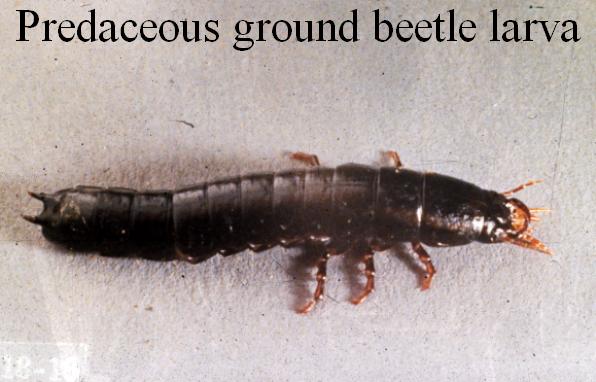
Photo by: Art Antonelli

Photo by: J. Vander Houwen, WSU Extension

WSU Extension programs and employment are available to all without discrimination.
Evidence of noncompliance may be reported through your local Extension office.
Right click here and select Copy Link to copy fact sheet URL