Powderpost beetles
categories: Fact Sheet Wood Destroying Pests
revision date: 2025-12-31 02:31
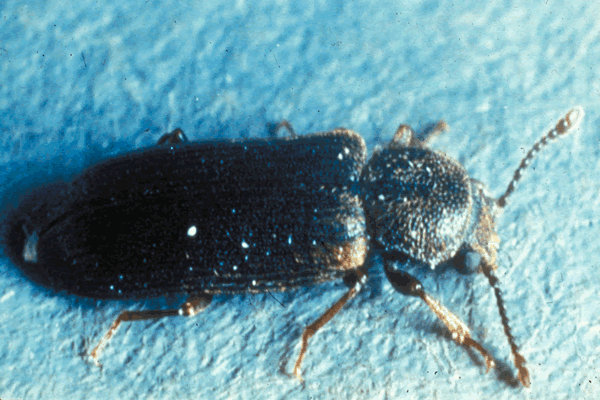
Photo by: Unknown
Biology
Powderpost beetles, or lyctids, feed on starch in hardwoods, such as oak, cherry, or ash, and they will also feed in bamboo. These insects are usually brought into a home in hardwood flooring, trim, plywood, and wooden articles such as furniture and tool handles.
The adult beetle is small, 1/8-3/8 inch long, and is red, brown, or black in color. These adult beetles mate and lay eggs on unfinished wood. The larvae develop and feed within the wood for 8 to 10 months, causing the damage. Powderpost beetle damage is recognized by the powdery frass (excrement) that is produced and falls out of the emergence holes.
Management Options
Use Integrated Pest Management (IPM) for successful pest management.
Non-chemical Management
Select non-chemical management options as your first choice!
- Determine if you have an active powderpost beetle population or if you are seeing only old emergence holes. Check the holes for powdery, talc-like frass.
- Prevention — Protect bare wood from attack by painting or finishing exposed surfaces. If the wood is already housing powderpost beetle larvae, they will not be killed but you will minimize the chance of reinfestation.
- If it is a small wooden article or furniture, you can place it in the freezer (at or below 0°F) for at least a week.
- Replacement — If the infestation is localized, replace the infested lumber. Be sure to consult a professional before doing lumber replacement.
- Use kiln-dried lumber for new construction.
Chemical Management
IMPORTANT: Visit Home and Garden Fact Sheets for more information on using pesticides.
- There are no pesticide recommendations for this pest.
- Consult a Pest Management Professional.

WSU Extension programs and employment are available to all without discrimination.
Evidence of noncompliance may be reported through your local Extension office.
Right click here and select Copy Link to copy fact sheet URL