Hackled band weavers
categories: Fact Sheet Stinging and Biting Pests
revision date: 2025-12-22 01:07
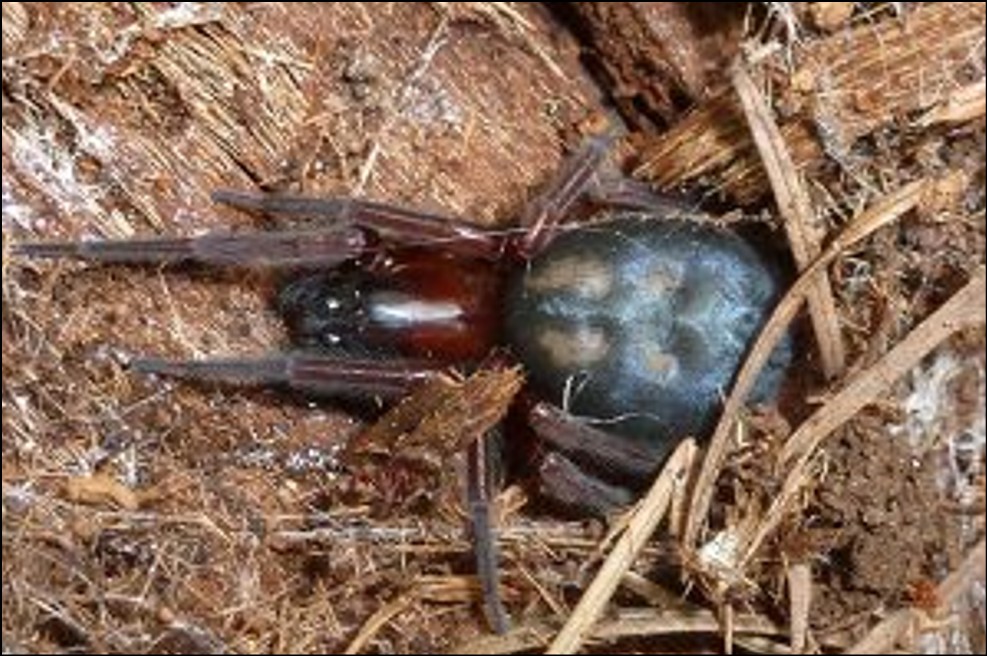
Photo by S. Collman, WSU Extension
Biology
These are robust spiders commonly found in crawl-spaces in western Washington. Hackled band weavers have grayish abdomens and chestnut colored legs and carapaces (exoskeleton over their head and thorax).
A bite from a hackled band weaver results in a temporarily painful sensation much like a yellowjacket sting. If you are bitten by a spider, you may want to seek medical attention. Also, bring the spider to an expert for correct identification.
- For more information, see the following publication: Common Spiders of Washington EM113E.
Management Options
Use Integrated Pest Management (IPM) for successful pest management.
Non-chemical Management
Select non-chemical management options as your first choice!
- Because these spiders are occasional to frequent visitors to our living space, we must make special efforts not to make it easy for them to gain access. For example, decreasing space in door thresholds, securing window screens and using any other measures to “bug-proof” the home would help eliminate entrance pathways for spiders. Many spiders are brought in with firewood, so collect wood with gloves and inspect wood thoroughly for their presence and carefully remove them.
- Use of mechanical devices such as fly swatters, shop vacs, brooms, etc. will help eliminate spiders.
- Commercial spider traps are effective at trapping wandering spiders such as hackled band weavers.
Chemical Management
IMPORTANT: Visit Home and Garden Fact Sheets for more information on using pesticides.
- Pesticide applications are a temporary fix unless efforts are made to prevent their entry into the house.
- Spraying spiders of this sort outdoors is not usually advised and extremely temporary in nature unless performed by a pest control company on a regular basis.
Additional Image
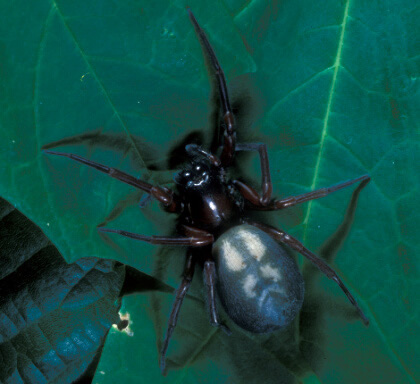
Photo by: unknown

WSU Extension programs and employment are available to all without discrimination.
Evidence of noncompliance may be reported through your local Extension office.
Right click here and select Copy Link to copy fact sheet URL