Cluster flies
categories: Fact Sheet Nuisance Pests
revision date: 2025-12-15 12:09
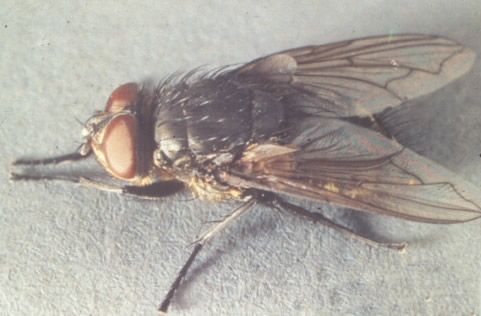
Photo by: Ken Gray
Biology
Cluster flies resemble house flies, but are larger and slower in movements. They are about 5/16 inch long, dark gray with black and gray checkered abdomens. Cluster fly larvae or maggot are parasites of earthworms. This makes managing breeding sites an unlikely control option since earthworms are almost everywhere.
The adults seek overwintering sites indoors (attics, wall voids, etc.) making them a nuisance pest. In the spring they migrate from their overwintering sites to human living spaces such as bedrooms, kitchens, living rooms, and windows, etc., becoming an unbearable nuisance.
Management Options
Use Integrated Pest Management (IPM) for successful pest management.
Non-chemical Management
Select non-chemical management options as your first choice!
- Maintain effective, tightly-fitting window and door screens.
- Screen vents to attics and crawl spaces with a mesh size small enough to prevent adult entry.
- Remove space under wall siding and around window and door frames. Caulking and sealing these areas helps to prevent adult entry.
Chemical Management
IMPORTANT: Visit Home and Garden Fact Sheets for more information on using pesticides.
- Be sure to address the adult fly entry places around the home mentioned above.
- Killing adults with sprays won’t make the problem go away – they’ll be back again next year.

WSU Extension programs and employment are available to all without discrimination.
Evidence of noncompliance may be reported through your local Extension office.
Right click here and select Copy Link to copy fact sheet URL