Ticks
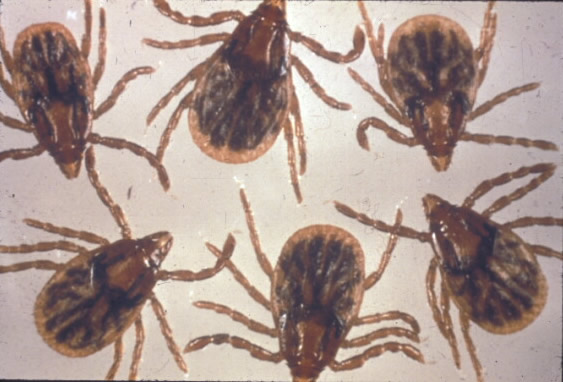
Photo by: unknown
Biology
Ticks are blood-sucking ectoparasites. They are commonly found on low-lying vegetation waiting for a host to brush past them. At that time, the tick will cling to the host and begin searching for a feeding site. By burrowing their mouthparts into the host, a tick obtains its necessary blood meal. Depending on the tick species, they can feed from a few minutes to weeks. Ticks can transmit diseases to their host during this feeding.
There are several tick species found in Washington.
- Dermacentor species are found in woodlands; grassy, sunny, open areas near woods; and near wetlands. These ticks feed on deer, livestock, dogs, and humans and can transmit Rocky Mountain Spotted Fever, Tick Paralysis, and Tularemia. These ticks include the American Dog tick.
- Ixodes species live in heavily-forested or brushy areas, but NOT in open areas. The immature stage prefers to feed on birds and small rodents but both immatures and adults will feed on humans, livestock and dogs. These ticks are found primarily in the western part of the state. Diseases transmitted by Ixodes species include Lyme disease, Tick paralysis, and Babesiosis. These ticks include the Northern Deer tick and the Western Black-legged tick.
- And finally, Ornithodoros species are found in Eastern Washington and are nesting parasites found in burrows and nests. They typically feed on small rodents. Humans can become incidental hosts when sleeping in rodent- and tick-infested areas such as cabins. Ornithodoros species are also known as “soft ticks” and spread Tick-borne Relapsing Fever.
Management Options
See "Using Integrated Pest Management (IPM) in the Landscape" for successful pest management techniques.
Non-chemical Management
Select non-chemical management options as your first choice!
- Avoid weedy, tick-infested areas.
- Frequently inspect for ticks. Look closely at the head, behind ears, and in the neck region, waistband, and around socks.
- Remove attached ticks as soon as possible to reduce the risk of disease transmission. While wearing gloves, or otherwise protecting yourself from tick fluids, grab the tick with tweezers as close as possible to the skin. With steady pressure, gently pull the tick straight out. Do not twist or jerk the tick because this may leave the tick’s mouthparts in the skin. Try not to crush or burst the tick and avoid touching it with bare hands.
- If exposure is unavoidable, tuck pant cuffs into your socks to prevent ticks from crawling up your leg. Wear light colored clothing to make it easier to find crawling ticks.
- Manage weeds or grass to reduce tick habitat.
- Limit dog access to tick infested areas and check pets often for ticks.
- Do NOT use fire to remove a tick.
Chemical Management
IMPORTANT: Always read and follow label directions when working with pesticides.
For more information on using pesticides visit :
- None recommended for control of ticks in the wild.
- See partial list of repellents for human and pet use.
- Read and follow all label instructions carefully and completely.
Approved Pesticides
If you choose to use a pesticide, some examples of products that are legal in Washington are listed below. Some products are labeled for just INDOOR or just OUTDOOR use, or may allow both uses. Be sure to choose a product appropriate for your situation. Always read and follow all label directions.

WSU Extension programs and employment are available to all without discrimination.
Evidence of noncompliance may be reported through your local Extension office.