Tropical rat mites
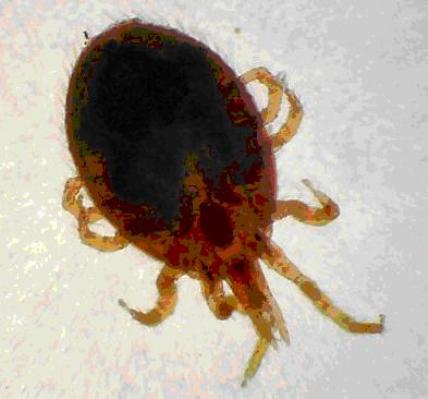
Photo by: Todd Murray
Biology
These small mites are 1-1.5 mm in length, grey to yellowish or even reddish after a blood meal. Their normal hosts include rats, mice, hamsters and probably other rodents as well. While tropical in origin, the rat mite can be a problem in temperate regions particularly where rats are allowed to flourish or when purchased rodents come home already infested.
Adult female tropical rat mites can live a couple of months and can lay about 100 eggs. The average length of the life cycle is about 11 days. When their normal hosts are killed, these mites will travel long distances often along pipes, wires in walls, or from branches of trees to the outside of homes.
Rat mites can survive extended periods without a meal. Once the host (rat) problem has been solved, rat mites can continue to be a problem up to two months after the rats are removed.
The bites of these mites are an irritating and sometimes painful condition that can persist for several days, leaving red spots on the skin. These are symptoms that can be produced by several arthropods such as fowl mites, fleas, etc., so if bitten be sure to submit specimens to an expert for positive identification.
Management Options
See "Using Integrated Pest Management (IPM) in the Landscape" for successful pest management techniques.
Non-chemical Management
Select non-chemical management options as your first choice!
- Determine if there is a rodent problem and if they are accessing the attic or crawl space or other points on the structure.
- Deny rodent access by vent screen repairs or making sure the screen vent mesh size is small enough that even mice cannot get through (openings should be 1/2 inch or smaller).
- Prune back branches which touch houses, particularly the roof and eaves. These branches can act as freeways for wandering rats and their mites which will access the house/attic from such limbs.
- Implement a rodent control program. In some cases, this is best achieved by a Pest Management Professional.
Chemical Management
IMPORTANT: Always read and follow label directions when working with pesticides.
For more information on using pesticides visit :
- None recommended.
- Contact a pest management professional.

WSU Extension programs and employment are available to all without discrimination.
Evidence of noncompliance may be reported through your local Extension office.