Yellowjackets
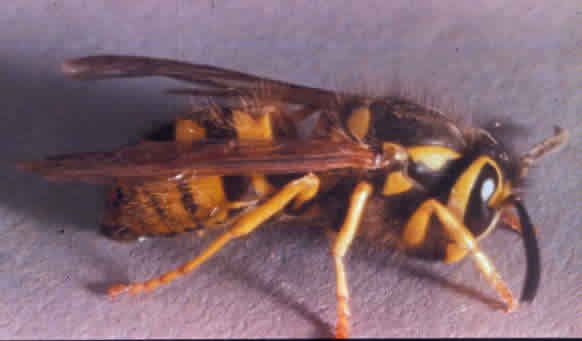
Photo by: Ken Gray
Biology
Yellowjackets are about 1/2 inch long as workers. They are striped with black and yellow or black and white. They are social wasps with an annual life cycle. Fertilized queens overwinter in protected sites to begin the building of a new colony each spring. The colony declines after new queens and males are produced in late summer or fall. They do not re-use old nests. They are aggressive and will sting when irritated.
There are two kinds of colonies–ground nesters and aerial nesters. Ground nesters are both scavengers and predators, hence can be a real nuisance (threat) at picnics. Aerial nesters tend to be less of a nuisance at picnics or barbecues since they are almost exclusively predators. The exception is when they build nests over doorways or in well-trafficked areas. Ground nesters frequently build nests in wall voids or attics and are particularly troublesome as they sometimes chew their way into rooms.
Yellowjackets are particularly aggressive in late summer or fall and sometimes sting without being provoked. They are attracted to certain odors and colors.
Management Options
See "Using Integrated Pest Management (IPM) in the Landscape" for successful pest management techniques.
Non-chemical Management
Select non-chemical management options as your first choice!
- For most successful management, do not allow conditions conducive to nest building or irritation of established nests.
- Avoid dense shrubbery around the house.
- Remove stumps or rotting logs near houses.
- Reduce vent screen size if current size allows entry.
- Do not wear perfumes or aftershave lotion during peak season.
- Do not wear clothes that are yellow or have floral patterns.
- Do not swat at them.
- Maintain effective, tightly-fitting window and door screens.
- Lure traps can be placed around the periphery of the area you are trying to keep yellowjackets away from. Adding a protein source such as meat to the traps acts as an attractant and may increase the traps success. Be sure to replace the meat frequently and remove dead yellowjackets from the trap.
Chemical Management
IMPORTANT: Always read and follow label directions when working with pesticides.
For more information on using pesticides visit :
- Products in an aerosol spray can equipped with a spray wand allow for accurate application to outdoor nests from up to 10 feet or more away.
Approved Pesticides
If you choose to use a pesticide, some examples of products that are legal in Washington are listed below. Some products are labeled for just INDOOR or just OUTDOOR use, or may allow both uses. Be sure to choose a product appropriate for your situation. Always read and follow all label directions.
Additional Image
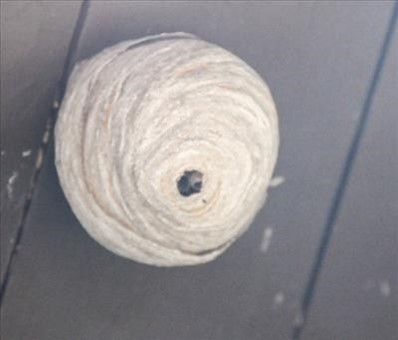
Photo by: M. Bush

WSU Extension programs and employment are available to all without discrimination.
Evidence of noncompliance may be reported through your local Extension office.