Crickets
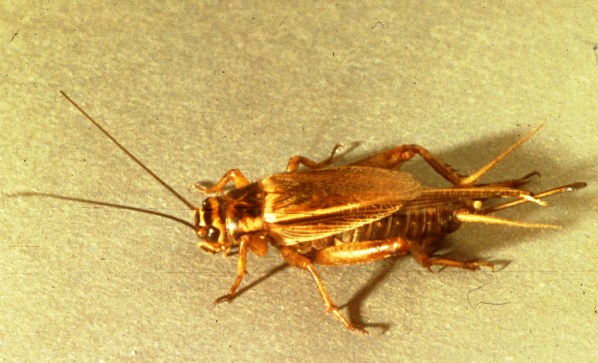
Photo by: K. Grey
Biology
There are two major cricket species that may invade homes. These include field crickets and the house cricket.
The house cricket is the most common home invader in our area. The house cricket adult averages about 3/4 inch long and is yellowish-brown or straw-colored, with 3 dark bands on the head. It has slender antennae which are longer than the body.
House crickets can survive a long time indoors. They are found in warm, dark locations, hiding by day and coming out at night, when they make their presence known by their chirping. They have been known to damage wool, nylon, fabrics and leather. They may also chew on paper and rubber, and on garments made of cotton, linen, silk or fur, especially those stained by perspiration or food.
Aside from their chirping and damage to stored goods, crickets can create odor problems when they die. This is especially noticeable when numbers are high.
Field crickets are similar in appearance, but are black instead of yellowish.
Management Options
See "Using Integrated Pest Management (IPM) in the Landscape" for successful pest management techniques.
Non-chemical Management
Select non-chemical management options as your first choice!
- Store garments, etc. that are not in use in protective bags or tightly sealed boxes. Clean soiled fabrics before storage to make them less attractive to pests.
- Crickets can access homes via open doors and windows and under door thresholds. Make sure windows are screened and doors and their thresholds are tight-fitting.
- If a regular chirping sound (day and/or night) is the only sign of infestation, check battery-operated smoke/fire/carbon monoxide alarms for low batteries.
- If you have crickets indoors, you can try to catch them by putting glue boards in the corners of the rooms.
Chemical Management
IMPORTANT: Always read and follow label directions when working with pesticides.
For more information on using pesticides visit :
- Outdoor pesticide applications are not recommended for crickets.
- Be sure to inspect the structure and eliminate potential entry points.
- If you have an indoor cricket problem contact a pest management professional.
Additional Image
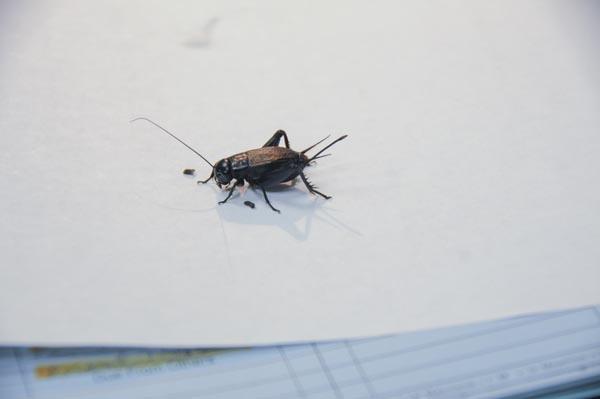
Photo by: M. Bush

WSU Extension programs and employment are available to all without discrimination.
Evidence of noncompliance may be reported through your local Extension office.