Indian meal moth
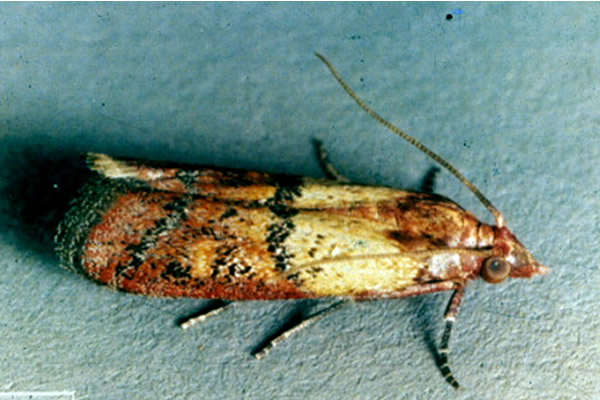
Photo by: Ken Gray
Biology
The most common moth found in foodstuffs is the Indian meal moth. This moth has a wingspan of about 1/2 to 3/4 inch. The tips or outer half of the wings are reddish-brown or “coppery”, while the basal parts are grayish-white. The larvae are usually off-white but can be pink, yellowish, greenish, or brownish. At maturity, the larvae are about 1/2 inch long. They spin a great deal of webbing on or near their food.
When larvae are ready to pupate they will wander considerable distances in search of a site which is often on walls, countertops, and ceilings. The larvae will feed in cereal, grain products, dried fruit, dry pet food, candy, dried milk, and many other foodstuffs.
Management Options
See "Using Integrated Pest Management (IPM) in the Landscape" for successful pest management techniques.
Non-chemical Management
Select non-chemical management options as your first choice!
- Find the source of the infestation and dispose of it.
- Maintain food in tightly-sealed containers to keep pests out.
- Physically destroy the larvae and pupae before they become reproductive adults.
- In areas where moths are flying, traps using pheromones (chemicals used by insects to communicate) can be used to monitor the pest population and trap the Indian meal moth adults. Pheromone traps are commercially available.
Chemical Management
IMPORTANT: Always read and follow label directions when working with pesticides.
For more information on using pesticides visit :
- None recommended

WSU Extension programs and employment are available to all without discrimination.
Evidence of noncompliance may be reported through your local Extension office.